After surgery, most people live normally. However, a small percentage develop certain digestive issues.
Here’s what actually happens to the body—and the 3 main conditions sometimes discussed after gallbladder removal:
First: what changes after surgery
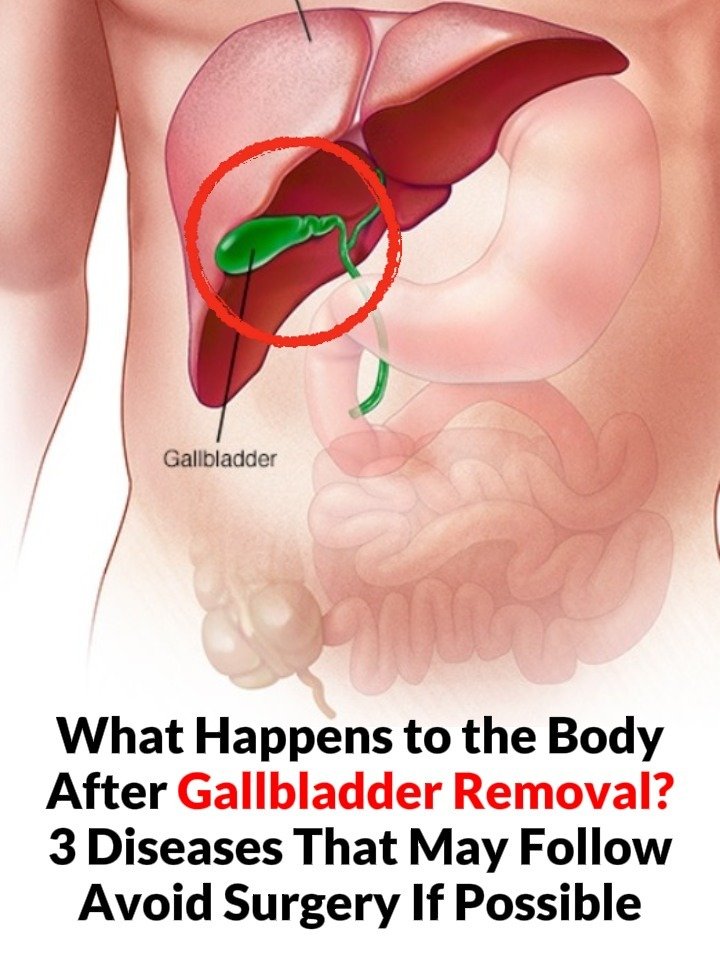
The gallbladder stores bile and releases it when you eat fatty food. After removal:
- Bile flows continuously from the liver into the intestine
- There is no storage “reservoir”
- Fat digestion still works, just less controlled
1. Bile acid diarrhea
Some people develop loose stools because bile flows more continuously into the intestines.
Symptoms:
- Frequent diarrhea
- Urgency after eating
- Worse after fatty meals
This often improves over time or can be treated with medication.
2. Post-cholecystectomy syndrome
This is a broad term, not one disease. It refers to ongoing or new symptoms after surgery.
Symptoms may include:
- Bloating
- Abdominal discomfort
- Indigestion
- Nausea or food intolerance
Important point: in many cases, symptoms are due to pre-existing digestive issues, not the surgery itself.
3. Bile reflux / gastritis-like symptoms
In some cases, bile can irritate the stomach or esophagus.
Possible symptoms:
- Burning upper abdominal pain
- Nausea
- Reflux-like discomfort
This is less common but treatable.
Important reality check
What these headlines don’t tell you:
- Most people have no long-term problems
- Many feel better after surgery because their original pain is gone
- Leaving a diseased gallbladder untreated can lead to:
- Severe infection
- Blocked bile ducts
- Pancreatitis (potentially dangerous)
So should surgery be avoided?
No blanket rule applies. Surgery is recommended when:
- Gallstones cause repeated pain
- There is inflammation or infection
- There is risk of complications
In those cases, avoiding surgery is often more dangerous than doing it.
Bottom line
After gallbladder removal, a minority of people may experience digestive changes like diarrhea or reflux symptoms, but most recover well and live completely normal lives. The “avoid surgery if possible” claim ignores the fact that untreated gallbladder disease can be far more harmful.
If you want, I can break down who actually benefits from gallbladder surgery vs who can safely manage without it—that’s where the real decision-making matters.