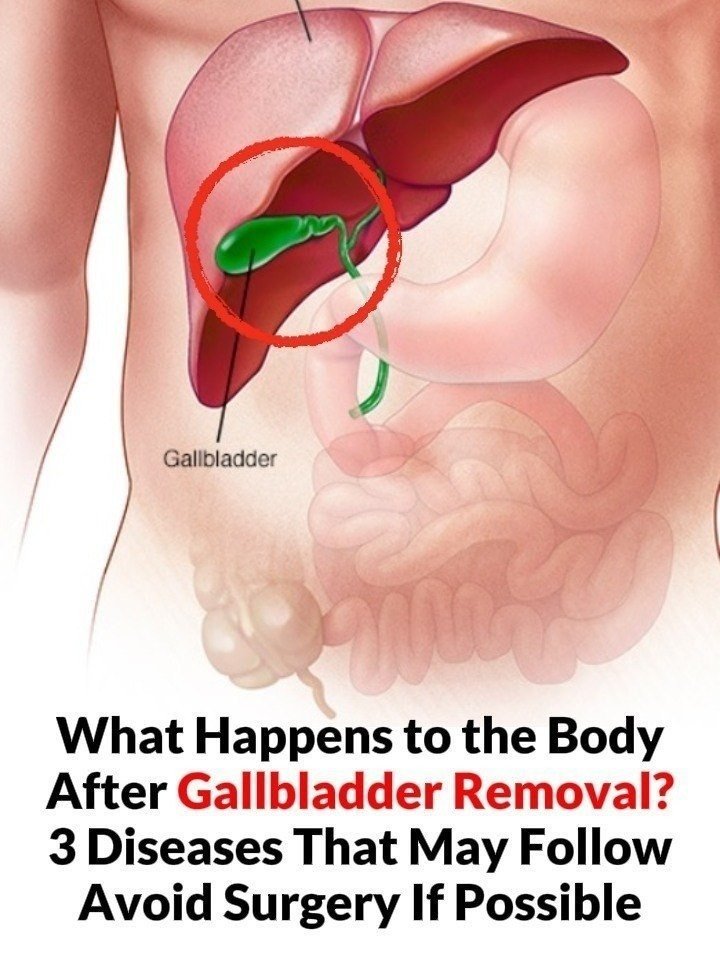
1. Post-cholecystectomy diarrhea (bile acid diarrhea)
Without a gallbladder, bile flows continuously into the intestine instead of being stored and released in controlled amounts.
- This can irritate the bowel in some people
- Leads to loose or frequent stools
- Often improves over time or with medication
2. Bile reflux or indigestion symptoms
Some people develop:
- Bloating
- Heartburn-like symptoms
- Upper abdominal discomfort
This happens because bile may flow more freely into the stomach or intestines without the gallbladder’s “buffering” role.
3. Post-cholecystectomy syndrome
This is a broad term for persistent or new digestive symptoms after surgery.
It may include:
- Abdominal pain
- Nausea
- Fatty food intolerance
- Irregular digestion
Important detail: this is not one disease, and in many cases the symptoms are due to underlying issues that existed before surgery (like bile duct stones or reflux problems), not the surgery itself.
The part clickbait headlines leave out
Most people do very well after gallbladder removal:
- They digest normally
- Return to a normal diet (sometimes after a short adjustment period)
- Have no long-term complications
And importantly, untreated gallbladder disease can cause serious problems like infection, rupture, or pancreatitis—conditions far riskier than the surgery.
“Should you avoid surgery when possible?”
A more accurate statement would be:
You should avoid gallbladder removal only when it’s not medically necessary.
Doctors usually recommend it when:
- Gallstones cause repeated pain
- There is gallbladder inflammation (cholecystitis)
- There is risk of complications
In those cases, surgery is not optional—it’s preventive treatment.
If you want, tell me your situation (symptoms, ultrasound results, or why surgery was suggested). I can break down whether surgery is typically recommended in that specific scenario and what alternatives actually exist.