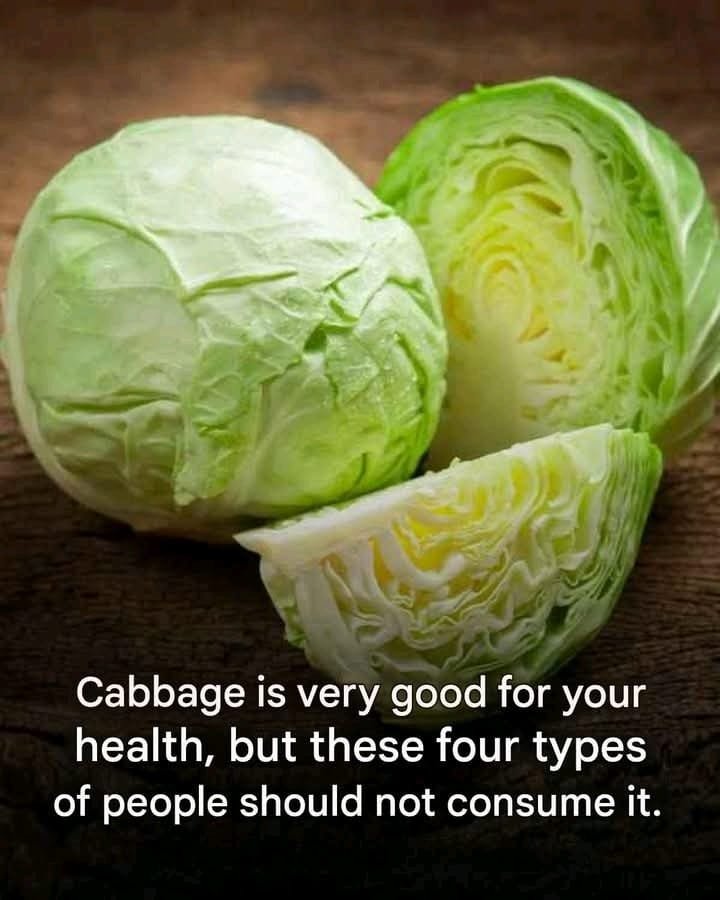
Cabbage
Who should be careful with cabbage (not necessarily avoid it)
1. People with thyroid disorders (especially iodine deficiency)
Cabbage contains natural compounds called goitrogens, which in very large amounts may interfere with iodine use.
Important context:
- Normal food amounts are usually safe
- Risk is mainly with very large raw intake over time
- Cooking reduces this effect significantly
2. People with IBS or sensitive digestion
Cabbage is high in fiber and fermentable carbohydrates.
It may cause:
- Bloating
- Gas
- Abdominal discomfort
This is especially true in:
Irritable Bowel Syndrome
3. People taking blood-thinning medication (inconsistent myth, but caution advised)
Cabbage is rich in vitamin K, which helps blood clotting.
This matters for:
Warfarin users
Key point:
- You don’t need to avoid cabbage
- You need to keep vitamin K intake consistent so medication can be properly adjusted
4. People with severe digestive inflammation or recovery after surgery
In some cases (temporary situations):
- Raw cabbage may be hard to digest
- Doctors may recommend a low-fiber diet short-term
This is temporary dietary management, not a lifelong restriction.
Who does NOT need to worry
Most people can safely eat cabbage, including:
- Healthy adults
- Older adults
- People with normal thyroid function
- People without digestive disorders
Health benefits of cabbage
When tolerated well, cabbage may support:
- Gut health (fiber)
- Heart health (antioxidants)
- Weight management (low calorie density)
- Immune support (vitamin C)
Bottom line
There are no strict “types of people who shouldn’t eat cabbage.” Instead, there are a few conditions where portion size or preparation method matters, especially for digestion, thyroid sensitivity, or blood-thinning medication use.
If you want, I can list vegetables that are easiest vs hardest to digest or explain how to reduce cabbage-related bloating.