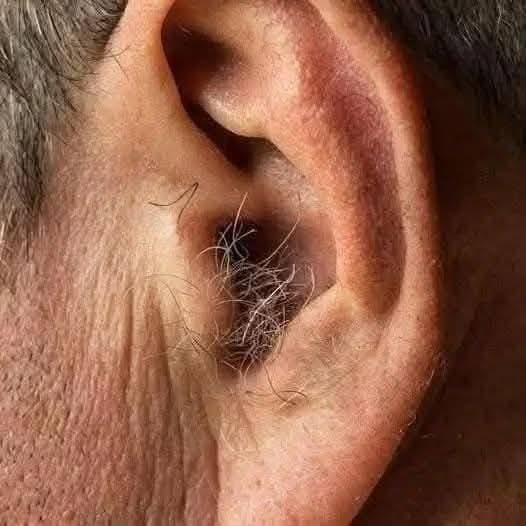
Ear hair: what it actually means
Hair growing in or around the ears is very common, especially as people age. It is mainly due to normal biology, not a mysterious “body signal.”
1. It’s mostly genetics
The biggest factor is your genes. Some people naturally develop thicker or more visible ear hair as they get older.
2. Hormones play a role
Hormones called androgens (like testosterone) can make certain hair follicles become more active over time.
That’s why ear, nose, and eyebrow hair often becomes more noticeable with age—especially in men.
3. Aging changes hair growth patterns
As we age:
- Some hair grows thicker in certain areas (ears, eyebrows, nose)
- Other hair thins on the scalp
This is a normal shift in hair follicle behavior.
What ear hair does NOT mean
Despite social media claims, ear hair does NOT indicate:
- Poor hygiene
- Disease
- “Toxins” in the body
- Special medical conditions in most cases
It is usually just a normal age-related change.
When it might need attention
Rarely, excessive or sudden changes in hair growth could be discussed with a doctor if:
- It appears very suddenly
- It is accompanied by other hormonal symptoms
- There are skin changes or irritation
Bottom line
Ear hair is mostly a natural, age-related and genetic trait, influenced by hormones—not a hidden warning sign from your body.
If you want, I can also explain why eyebrow and nose hair often increase with age too—it follows the same pattern.