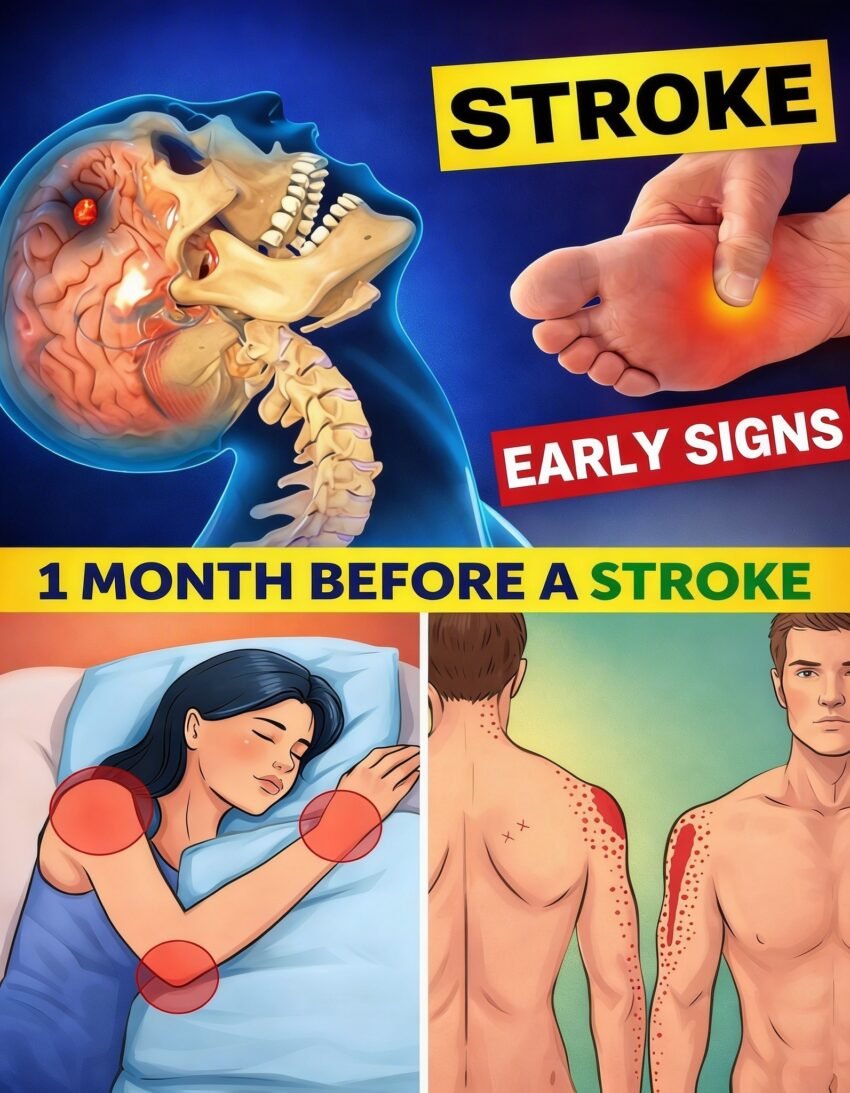
8 Warning Signs of Stroke That May Appear Before and 9 Tips to Prevent It
Introduction
Stroke happens when blood flow to part of the brain is blocked or a blood vessel bursts. It is a medical emergency. While most strokes occur suddenly, some people may experience warning symptoms in the days or weeks before—often called a transient ischemic attack (TIA) or “mini-stroke.”
Recognizing early signs and managing risk factors can significantly reduce the chance of a major stroke.
8 Early Warning Signs That May Appear Before a Stroke
1. Sudden Weakness or Numbness
Especially on one side of the face, arm, or leg. It may come and go.
2. Temporary Speech Problems
Slurred speech, difficulty finding words, or trouble understanding others.
3. Sudden Vision Changes
Blurred vision, double vision, or temporary loss of vision in one or both eyes.
4. Unexplained Dizziness or Loss of Balance
Feeling unsteady, especially when walking or standing.
5. Severe or Unusual Headache
A sudden, intense headache with no clear cause.
6. Confusion or Mental Fog
Sudden difficulty thinking clearly or understanding simple tasks.
7. Brief Paralysis Episodes
Short-lasting inability to move part of the body properly.
8. “Mini-Stroke” Symptoms That Resolve Quickly
Symptoms that disappear within minutes or hours but should never be ignored.
Important Note
Even if symptoms go away, they may signal a transient ischemic attack (TIA), which is a strong warning that a full stroke may occur soon. Immediate medical evaluation is essential.
9 Tips to Help Prevent Stroke
1. Control Blood Pressure
High blood pressure is the leading risk factor for Stroke.
2. Manage Blood Sugar
Keep diabetes under control with diet, exercise, and medication if prescribed.
3. Lower Cholesterol
Healthy diet and, if needed, medications like statins can reduce risk.
4. Quit Smoking
Smoking significantly damages blood vessels and increases clot risk.
5. Exercise Regularly
At least 30 minutes of moderate activity most days improves heart and brain health.
6. Eat a Heart-Healthy Diet
Focus on fruits, vegetables, whole grains, lean protein, and healthy fats.
7. Limit Salt and Processed Foods
Too much sodium increases blood pressure.
8. Maintain a Healthy Weight
Excess weight increases strain on the cardiovascular system.
9. Limit Alcohol Intake
Heavy drinking increases stroke risk and raises blood pressure.
When to Seek Emergency Help
Call emergency services immediately if someone has:
- Face drooping
- Arm weakness
- Speech difficulty
These are known as the FAST signs of stroke.
Conclusion
Stroke is often preventable and treatable when warning signs are recognized early and risk factors are managed properly. Even short-lived symptoms should be taken seriously, as they may be an early alert of a more serious event.
If you want, I can also turn this into:
- a simple FAST checklist poster
- a short social media version
- or a guide focused only on prevention for high blood pressure patients