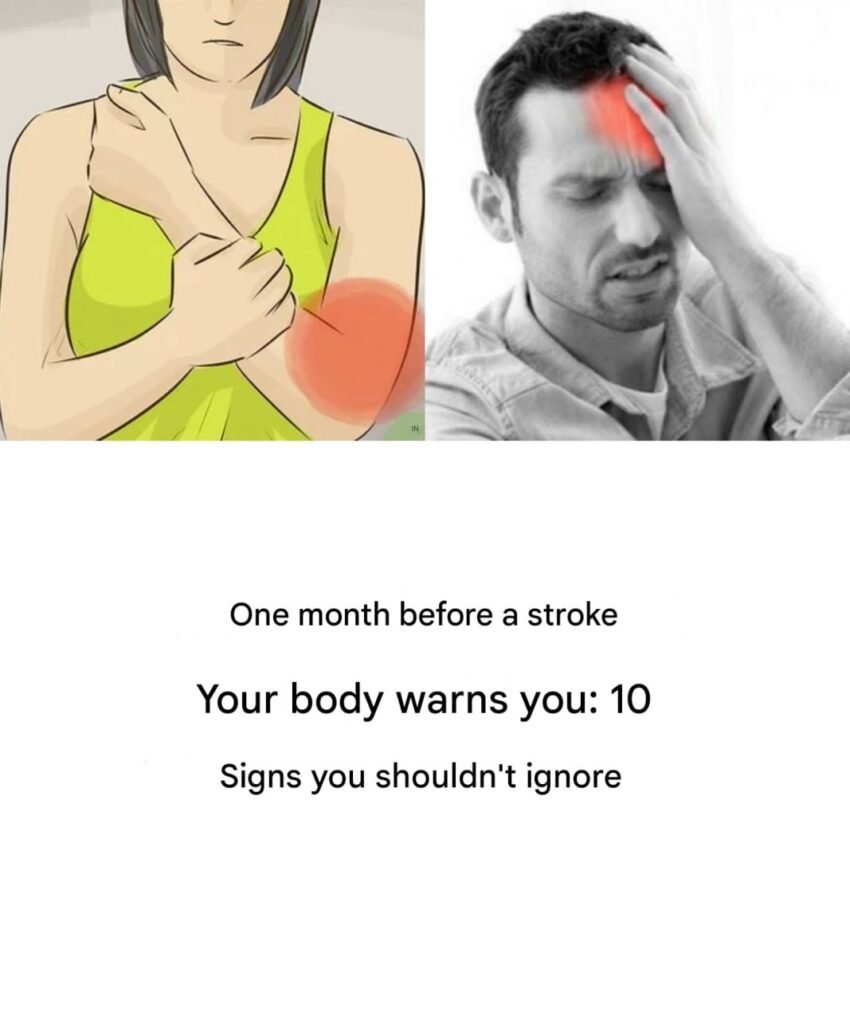
The idea that the body always gives a clear “one-month warning before a stroke” is not medically reliable. Strokes often happen suddenly. However, there are warning signs that can appear days or weeks earlier in some people—usually due to reduced blood flow to the brain or a mini-stroke (TIA).
A TIA (transient ischemic attack) is especially important because it can be an early warning of a full stroke.
Here are 10 warning signs you should never ignore:
1. Sudden weakness or numbness
- Especially on one side of the face, arm, or leg
- May come and go if it’s a TIA
2. Face drooping
- One side of the face looks uneven when smiling
- Difficulty controlling facial muscles
3. Slurred or confused speech
- Trouble speaking clearly
- Words sound unclear or mixed up
4. Sudden vision problems
- Blurred vision
- Loss of vision in one or both eyes
- Double vision
5. Unexplained dizziness or loss of balance
- Difficulty walking straight
- Feeling unsteady or falling easily
6. Severe or unusual headache
- Sudden, intense headache with no clear cause
- More common in hemorrhagic stroke
7. Confusion or memory problems
- Trouble understanding simple instructions
- Sudden mental “fog”
8. Temporary numbness or tingling
- Brief episodes that disappear
- Often ignored but important warning sign
9. Difficulty swallowing
- Food or liquid feels hard to swallow
- May indicate neurological involvement
10. Short episodes of stroke-like symptoms (TIA)
- Symptoms last minutes to hours and then disappear
- This is a major warning that a full stroke risk is high
Important medical fact
A stroke itself is defined as a sudden interruption of blood flow to the brain, not a slow event that always gives long warning signs. However:
- TIAs can occur days or weeks before
- About 1 in 3 people with TIA may later have a stroke if untreated
When to seek emergency help
Call emergency services immediately if someone has:
- Face drooping
- Arm weakness
- Speech difficulty
This is known as the FAST rule (Face, Arm, Speech, Time).
Conclusion
There is no guaranteed “one-month warning,” but the body may show temporary neurological symptoms (especially TIA signs) before a stroke. These symptoms should always be treated as urgent.
If you want, I can also explain:
- How to reduce stroke risk after 50
- Or early warning signs specific to high blood pressure or diabetes patients