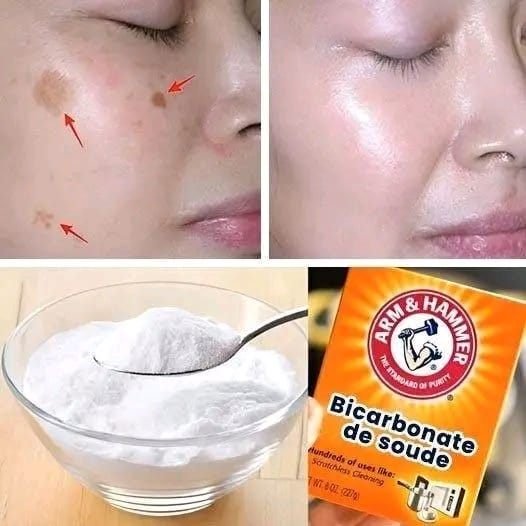
Here’s what actually works—and what to avoid.
What Are Age Spots?
Age spots, also called Hyperpigmentation or solar lentigines, are flat dark patches caused by long-term sun exposure and increased melanin production. They’re common with aging but can appear earlier with UV damage.
Why Baking Soda Is a Bad Idea
Baking soda is alkaline, while your skin is naturally slightly acidic.
Problems it can cause:
- Disrupts your skin’s protective barrier
- Leads to irritation and inflammation
- Can worsen Hyperpigmentation instead of improving it
Any short-term “brightening” is usually just surface exfoliation—not real treatment.
4 Safer, Effective Ways to Fade Age Spots
1. Daily Sunscreen (Non-Negotiable)
Use a broad-spectrum SPF 30 or higher every day.
Why it works:
Prevents spots from getting darker and stops new ones from forming.
2. Topical Vitamin C
Benefits:
- Brightens skin tone
- Reduces dark spots over time
- Protects against environmental damage
Look for stable formulations for best results.
3. Retinoids
Derived from vitamin A, retinoids speed up skin cell turnover.
What they do:
- Fade pigmentation gradually
- Improve overall skin texture
- Stimulate collagen production
Start slowly to avoid irritation.
4. Chemical Exfoliants
Ingredients like AHAs (glycolic acid) help remove pigmented surface cells.
Benefits:
- Even out skin tone
- Improve radiance
- Support long-term fading of spots
Use a few times per week—not daily unless directed.
When to See a Professional
If spots are persistent or you want faster results, a dermatologist can offer:
- Prescription-strength creams
- Chemical peels
- Laser treatments
These are far more effective and safer than DIY remedies.
Final Thoughts
Baking soda might sound like a quick fix, but it’s more likely to harm your skin than help it. Treating Hyperpigmentation requires consistency, sun protection, and proven ingredients.
If your goal is clearer, more even skin, it’s worth choosing methods that actually support your skin rather than damage it.