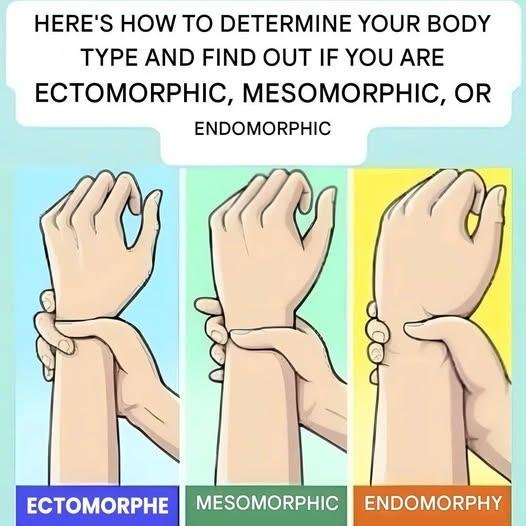
The idea of being an ectomorph, mesomorph, or endomorph comes from an old body-type theory called somatotypes. It’s still popular in fitness content, but modern science considers it an oversimplification of how human bodies actually work.
That said, it can still be useful as a rough description of tendencies.
🧬 The 3 classic body types
1) Ectomorph
- Naturally lean and slim
- Narrow shoulders and hips
- Finds it hard to gain weight or muscle
Typical challenges:
- Struggles to bulk up
- Fast metabolism (or high activity level)
How to make the most of it:
- Focus on strength training (compound lifts)
- Eat calorie-dense, protein-rich meals
- Prioritize rest and recovery
2) Mesomorph
- Naturally muscular and athletic
- Gains muscle relatively easily
- Balanced frame
Typical strengths:
- Responds quickly to training
- Gains strength and muscle efficiently
How to make the most of it:
- Mix strength + cardio for balance
- Watch calorie intake to avoid unwanted fat gain
- Vary training to keep progress going
3) Endomorph
- Naturally rounder or softer build
- Gains fat more easily
- May build muscle easily but stores fat too
Typical challenges:
- Slower fat loss
- Weight management requires consistency
How to make the most of it:
- Focus on diet quality and portion control
- Combine strength training + cardio
- Stay consistent rather than extreme
🧠 Important reality check
Most people are not purely one type. You’re usually a mix, like:
- ecto-meso
- meso-endo
- or somewhere in between
Also, your body type can change over time with:
- training
- diet
- age
- lifestyle
👍 Better modern approach
Instead of focusing too much on labels, fitness experts now emphasize:
- calorie balance
- progressive strength training
- protein intake
- sleep and recovery
These matter far more than your “type.”
If you want, I can help you figure out which category you most closely resemble based on your height, weight, and goals—and build a simple diet + workout plan around it.