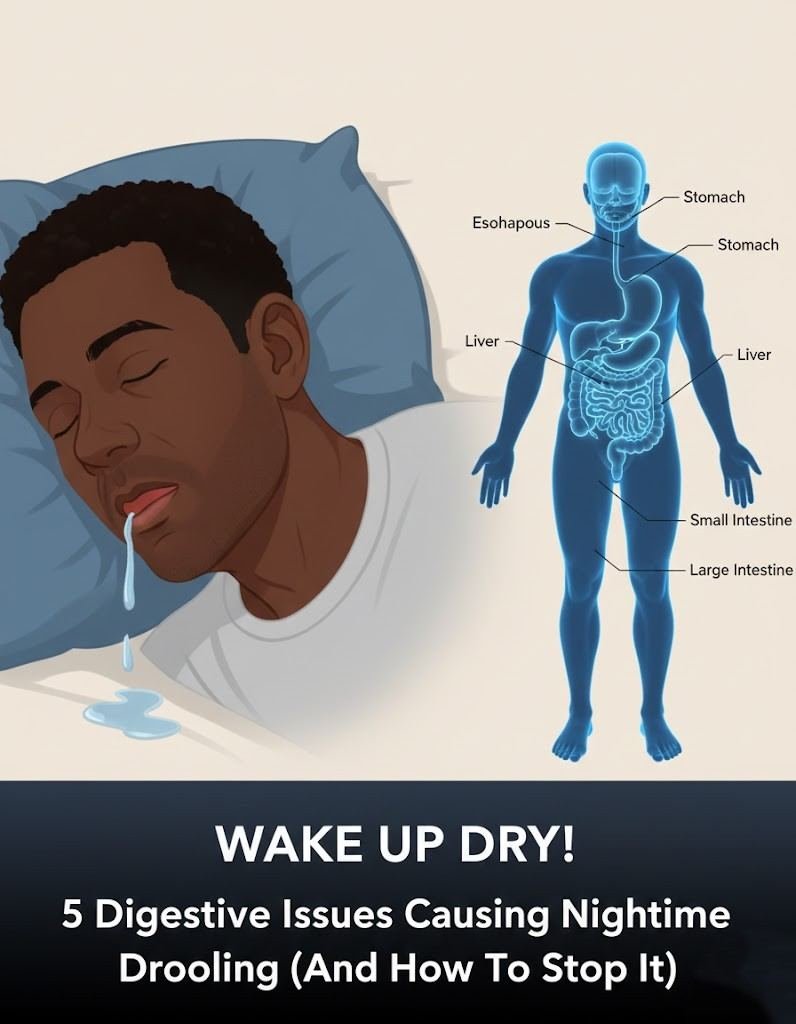
Let’s break down what’s actually going on.
First: what causes drooling in sleep?
Drooling (sleep-related saliva leakage) usually happens because:
- Your mouth is open during sleep
- You’re sleeping on your side or stomach
- Your swallowing reflex slows down in deep sleep
- Your saliva production is normal, but you’re not swallowing it as often
In most people, it’s benign and harmless.
When it might signal a real problem
Doctors only get concerned when drooling is new, excessive, or paired with other symptoms.
Here are real medical causes (not “terrifying hidden diseases”):
1. Sleep apnea
Obstructive sleep apnea
People may sleep with an open mouth because of blocked airways. Signs include loud snoring, choking sounds, and daytime fatigue.
2. Nasal blockage
Allergies, sinus infections, or a deviated septum can force mouth breathing.
3. Acid reflux at night
Stomach acid irritation can increase saliva production as a protective response.
4. Medication side effects
Some drugs relax facial muscles or increase saliva production.
5. Neurological conditions (rare in isolation)
Conditions like Parkinson’s disease can affect swallowing control—but drooling alone is not enough to suggest this.
6. Poor sleep posture or habits
Sleeping on your side or with your mouth open is the most common reason.
What’s NOT true
- It is not usually a sign of “hidden dangerous diseases”
- It does not automatically indicate brain damage or organ failure
- It is not something doctors consider alarming by itself
When you should actually see a doctor
Only get checked if drooling comes with:
- Loud snoring or breathing pauses
- Choking or gasping during sleep
- Severe daytime sleepiness
- Sudden onset after a neurological event
- Difficulty swallowing while awake
Simple ways to reduce drooling
- Sleep on your back if possible
- Treat nasal congestion
- Manage allergies
- Improve sleep posture
- Stay hydrated (thick saliva can worsen drooling)
Bottom line
The viral claim is sensationalized clickbait.
Drooling during sleep is usually a sleep position or airway issue, not a “warning of terrifying diseases.”
If you want, I can also explain when drooling actually becomes a neurological red flag vs completely normal sleep behavior.