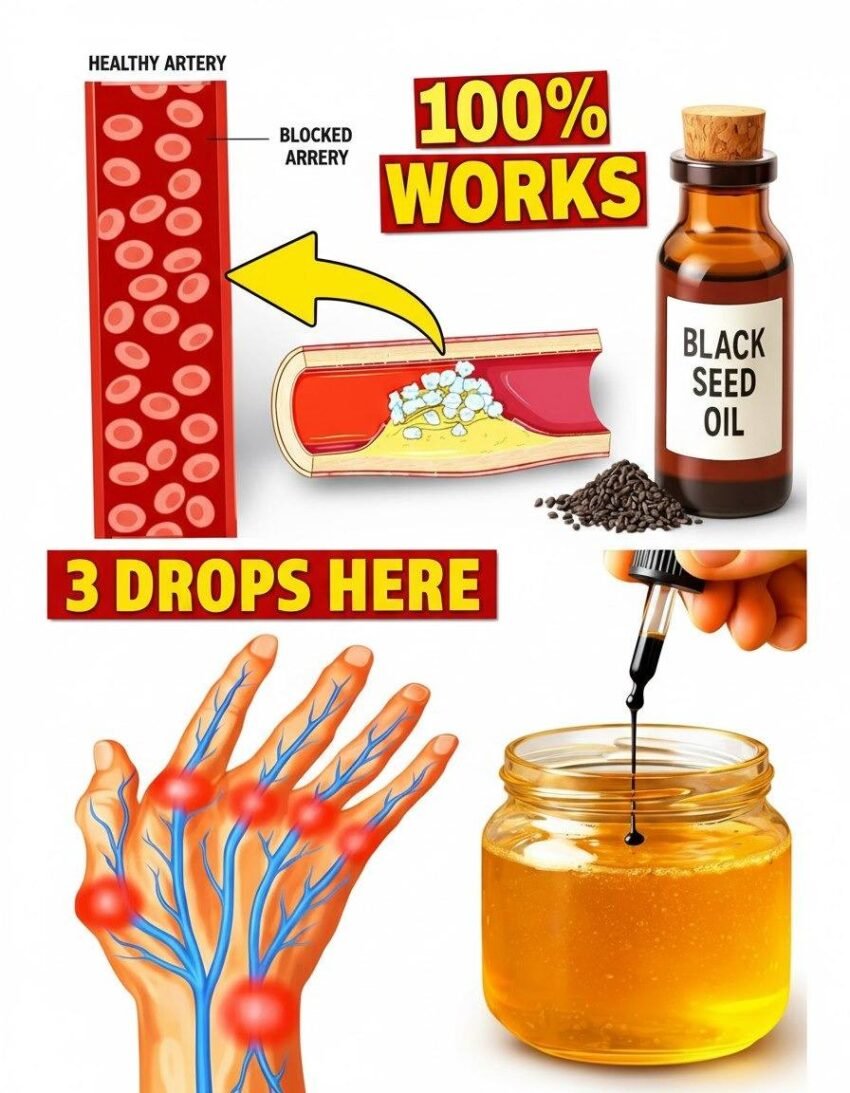
The claim “Old doctors add 3 drops of black seed oil in honey to fix 13 problems” is a modern internet-style exaggeration of traditional herbal use, not a medically proven universal cure.
What it’s referring to
- Black seed oil comes from the seeds of Nigella sativa (black cumin).
- Honey has long been used in traditional medicine for soothing and antimicrobial properties.
These have been used in folk and traditional systems (including Unani and Ayurveda) for general wellness support.
What research actually suggests
Some small studies show black seed oil may have:
- Mild anti-inflammatory effects
- Possible antioxidant activity
- Small improvements in blood sugar or cholesterol in some cases
- Antimicrobial properties in lab settings
Honey may:
- Soothe cough and sore throat
- Support wound healing when applied topically
The important truth (this is where the claim gets exaggerated)
There is no credible scientific evidence that this mixture can “fix 13 problems” or act as a universal treatment.
It does not cure or replace treatment for:
- Diabetes
- Heart disease
- Kidney disease
- Infections requiring antibiotics
- Chronic illnesses
Why these claims spread online
- Traditional remedies are often oversimplified into “miracle cures”
- Social media turns “may support health” into “cures everything”
- Old remedies get rebranded as secret “ancient doctor hacks”
Safety note
Black seed oil is generally safe in small amounts, but:
- High doses can lower blood pressure or blood sugar
- It may interact with medications
- It can cause stomach upset in some people
Bottom line
This is a wellness tradition, not a medical treatment plan.
A few drops in honey might support general health—but it does not “fix 13 problems.”
If you want, I can break down which health benefits black seed oil actually has the strongest evidence for (and which ones are pure myth).